In critical business deployments, stability and hardware selection directly determine service continuity and performance. This article focuses on the topic of “explaining why German cloud servers are suitable for critical businesses from the perspectives of stability and hardware selection.” It details the advantages of the German cloud environment in terms of reliability, hardware ecosystem, networking, and compliance, to help decision-makers make more informed choices regarding architecture.
Stability is the top priority for critical businesses. German cloud service providers typically employ multi-layered redundancy designs in their data centers, including for power, cooling, and multi-availability zone deployment, to reduce the risk of single points of failure. For businesses, this means that higher SLAs can be achieved, with shorter recovery times from failures, thereby ensuring the continuous availability of core services.
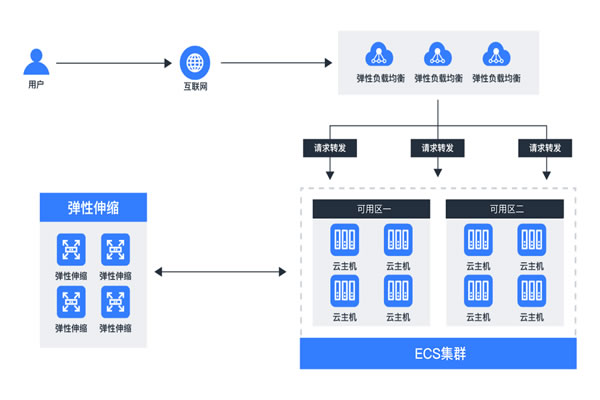
Hardware selection directly affects computing performance and IO stability. Choosing instances that support enterprise-grade SSDs, scalable memory, and multi-core CPUs ensures consistent responsiveness and throughput in high-concurrency or data-intensive scenarios. German cloud services typically emphasize hardware lifecycle management and regular updates to reduce the risk of performance degradation caused by outdated equipment.
Critical business applications have high requirements for storage latency and IO consistency. Using enterprise-grade persistent storage, reasonable IO quotas, and caching mechanisms can significantly reduce latency jitter. German cloud providers focus on isolation and QoS strategies in data center layout and storage architecture to improve the stability of critical workloads.
Network stability and latency directly affect user experience and data synchronization efficiency. Data centers in Germany typically have a robust local interconnection ecosystem and multiple international exits, enabling low-latency connectivity for local business scenarios. At the same time, through reasonable edge and origin-pull strategies, international access and local performance requirements can be balanced.
For key industries such as finance and healthcare, data compliance and sovereignty are crucial. Germany’s strict data protection and compliance framework drives cloud services to meet high standards in areas such as access control, auditing, and encryption. Improving compliance not only reduces legal risks but also enhances the controllability and resilience of business operations in the face of emergencies.
Observability includes logs, metrics, and distributed tracing, which are core capabilities for ensuring stability. The German cloud service ecosystem typically supports a mature monitoring and alerting system, enabling rapid identification and response to performance fluctuations or failures. By combining it with automated operations and maintenance, human errors and recovery times can be minimized.
In summary, from the perspectives of stability and hardware selection, German cloud servers have clear advantages in terms of redundancy design, enterprise-grade hardware, network layout, and compliance, making them suitable for hosting critical business operations. It is recommended that companies focus on SLAs, hardware specifications, storage I/O performance, and compliance support when making purchases. They should also design for multiple availability zones and observability, taking into account their business traffic, to ensure long-term stable operation.
- Latest articles
- Basic Information On Taiwan Proxy Servers, Common Terminology Explanations, And Purchase Precautions
- How To Choose A Cloud Server In Thailand: From Network Latency To After-sales Service, Comprehensive Aspects
- Recommended Recommendations For Operators To Improve Thailand's High-Defense VPS Protection And Bandwidth Stability By Comparison
- Optimized Storage Costs For Hong Kong Hosted Servers, Hard Disk Servers, Layered Storage, And Cold Archiving Solutions
- Are Tencent Cloud Korean Servers Native? Recommendations For Local Service Provider Integration And Latency Optimization
- The Enterprise Migration Guide Teaches You How To Apply For US Dual-line Server Hosting To Ensure Compliance
- How Does AWS Cloud Server In Japan Charge? Bill Analysis And Fee Alert Settings
- Beginner's Guide: Which Hong Kong Site Cluster Servers Are Best To Use? Choose Based On Your Business Scale
- A Detailed Explanation Of US High-defense Servers Involves Latency, Bandwidth, Cleaning Capability, And SLA Comparison
- A Summary Of Common Questions About Hong Kong VPS Access In The US And A Guide To Optimal Connection Configurations
- Popular tags
-

Volkswagen Server German Import Case Shares Experience Summary Of Transnational Project Deployment
share the german import case of volkswagen servers and practical experience in cross-border project deployment, covering optimization suggestions for compliance, network, logistics, computer room and localized operation and maintenance. -

How To Optimize The Wiring Design And Management Of German Server Rooms
this article discusses how to optimize the cabling design and management of german server rooms and provides professional suggestions and best practices. -

How To Choose A Suitable German Physical Root Server
this article will provide you with a detailed guide to choosing a suitable german physical root server, including performance, stability, security and other considerations.